Showing posts with label Cameroon. Show all posts

Friday, April 12, 2024

Bible translation is justice - Dr. Kenmogne

Dr. Michel Kenmogne, SIL's Executive Director since 2016, wrote an article on Bible translation as justice, in the current edition of JOT: 

Because Bible translation acknowledges and values all languages, the advent of Scriptures in minority languages goes a long way to proclaim that the speakers of these languages are equal in dignity and are worthy to connect with their Creator in non-mediated terms. Around the world, people from minority speaking communities have expressed the value of Bible translation as justice in different ways.

  • “Here is a document which proves that we also are human beings—the first and only book in our language,” said an African Christian holding a translated Gospel in his hands for the first time (quoted in Sanneh 2008:177).

  • “Now we see that our friends in the foreign countries regard us as people worthwhile,” said a Christian in Angola holding Scriptures in his hands for the first time (quoted in Sanneh 2008:177).

  • “I know that in my body I am a very little man, but today as I see the whole Bible in my language, I feel as big as a mountain” (quoted in Sanneh 2008:177). 

  • “When we go to the politicians, they don’t know us. But now God knows us. Now we are counted among the children of God,” said the Chief of Kpandai Wura as he tearfully evoked the marginalisation of the Nawuri people of Ghana (2012). This was a call for the Nawuri people to look beyond their current socio-political marginalisation and develop the confidence that comes from the knowledge of also being “children of God”.

In this regard, Bible translation and the empowerment it brings becomes a critical organising principle and a practical tool for transformation. For a vulnerable and marginalised group like the Nawuris, being “counted as children of God” is more than spiritual transformation. It is a key to transforming their perception of themselves and unleashing their potential to flourish in all regards as people created in the image of God...

Bible translation is not just a strategic tool to ensure the cross-cultural transmission of the Gospel and enable the growth of God’s Kingdom. Bible translation is justice. It sets the context for people to recover their imago dei and regain the confidence to meaningfully engage with God and with others within communities and nations.

You can read the whole article here. 

Monday, April 17, 2017

Scripture Use: Audio-Visual Training in Africa

A friend of ours made this video about training Bible translation teams and/or other members of the language communities, assisting them in using the translated Word of God.  The 3:11-long video is in French, but anglophones can also benefit greatly from watching Scripture engagement in action in Africa.

Monday, February 1, 2016

Le Sycomore: disponible en ligne

For our French-speaking readership (or those interested in the francophone world!), you may be interested to know that a few Cameroonian colleagues have recently published in the latest issues of Le Sycomore. If you are interested, you can now read (in French) about:
  • the benefits of discourse analysis (in Numala) 
  • the history of the term "tax" in Ezra 4:13, and/or 
  • the practice of writing book introductions in Bible translation project(s)  
Ps. In the past, we were required to purchase hardcopy, paper editions of this revue, but I am thrilled to see that they are now making it available online for free. What a gift to the translation community in particular, and to the church (esp. the French-speaking church), in general.


Thursday, July 16, 2015

Translating "Slow of Speech and of Tongue"

In Exodus 4:10, we read another reason Moses gives to Yahweh for his reticence to serve as Yahweh's special envoy to Pharaoh.
But Moses said to the LORD, 'Oh, my Lord, I am not eloquent, either in the past or since you have spoken to your servant, but I am slow of speech and of tongue.'
The ESV's wording "slow of speech and of tongue" interprets the Hebrew expression which literally reads, "heavy mouth/lip and heavy tongue."

When we were working with one language group in Cameroon, we came upon that verse in a checking session. Their draft translation had rendered the last part of this verse as "but I stutter [i.e., a physical disability, a speech impairment]."

Two discussion points with the translation team
1. Moses does make a claim about having speech difficulties, but this does not mean he actually did have a speech impediment. To translate the expression as such is too narrow an interpretation. The Hebrew adjective "heavy" here does not at all require meaning "speech impediment" or "stutter." Furthermore, Moses evidently did not have a debilitating and shameful speech problem, despite what he says in Exod 4:10a; he articulated himself just fine in his interactions with the people of Israel and with Yahweh in Exodus 2-4. And his later proficiency with words is well-documented in his interactions with Pharaoh and in his sermons (Deuteronomy). Moses received a good education in Egypt during his first 40 years, and no doubt this education included both reading and speaking.

2.  Many scholars (e.g., see Douglas Stuart's Exodus commentary) are convinced - based on analogous statements in the OT - that this verse may actually record Moses making an excuse based on humble deference (not a statement aligning with reality). Moses could actually articulate with his mouth just fine, but in keeping with common practice of the day, he offered his superior (Yahweh) an excuse that was not actually true of himself: speech difficulties.

Conclusion
Whether or not Moses actually had speech difficulties, the text records that Moses claimed he did. To be more faithful to the Hebrew expression, the team decided to change their translation to a more general expression for speech difficulties rather than narrowly restricting the meaning to a physical handicap. The team also debated whether or not to put a footnote on the bottom of the page to explain that it is plausible that Moses did not actually have a physical impairment (e.g., a stuttering problem), but that he may simply be giving Yahweh a self-deprecating reason to explain his reticence to speak to Pharaoh (in English, we might say "false humility").    

Wednesday, June 3, 2015

Appointed by Yahweh in Jonah 1:17*

"Yahweh appointed a great fish to swallow up Jonah..."
(Jonah 1:17a)

One significant theme in Jonah is Yahweh’s sovereignty.  The Hebrew verb מנה (“to appoint”) occurs four times to detail some of his dominion. He directed the great fish to deliver and transport Jonah (1:17), a plant to shade him (4:6), a worm to strike the plant (4:7), and the scorching wind with the sun to strike him (4:8). The book of Jonah is about Yahweh (see 4:2)!

In 1:17 (above), Yahweh appointed or directed a great fish, meaning that Yahweh made the fish intervene, assigning it a task. This Hebrew verb thus fundamentally entails the sense “to command or order” (S#1), but given the purpose statement in the verse (“to swallow up Jonah”), the translation of the verb should also entail “to designate or name someone/thing” (to a function) (S#2). Yahweh did not send a large fish without aim, but he authoritatively dispatched it (S#1) to accomplish a certain job (S#2). This important and profound verb highlights the fact that Yahweh, as Master of all things, accomplished his will through the fish.

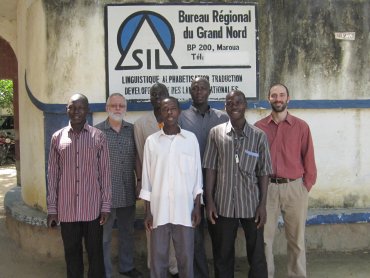
We pray for great biblical wisdom for our dear brothers translating the Word and using these notes in Cameroon (see some of those translators above to the left), and that the Lord would grant the same for other translation teams with whom we have the privilege of ministering.

*Adapted from Chris' Notes for Cameroonian translators.

Saturday, April 5, 2014

Pray for Far North, Cameroon

(Reuters) - Two Italian priests and a Canadian nun were kidnapped in northern Cameroon overnight, a bishop and a government source said on Saturday, months after a French priest was seized nearby.

Monday, May 20, 2013

Cameroon's National Holiday

Cameroon celebrated today its 41st annual national holiday: celebrates the unification of Cameroon (Anglophone and Francophone parts) and inauguration of the republic.

Also celebrated in Paris (note the young image of Paul Biya in the background)!

Monday, April 15, 2013

Election of Cameroon's Senators

Election was held Sunday, April 14th for Cameroon's senate which had been called for by the constitution in 1996.  70 senators will be elected by vote and then 30 will be appointed by President Paul Biya to bring the total to 100 senators. The president of the senate will become the #2 person in power (in the event of the president's sudden death or incapacitation, this person becomes president).

According to reports, the election was largely peaceful (at least in Bamenda).

Results are supposed to be posted within 15 days.

Thursday, December 13, 2012

Active OT Consultant in Cameroon: Passed Away

This press release from Wycliffe Canada serves as an obituary. We are saddened to lose such a valuable member of the OT translation family, a friend, mentor, encourager, visionary, and coach in Cameroon. This is the first time in SIL Cameroon's 43-year history that a member has died while in active service in the country.
Wycliffe Bible Translators sadly announces the death of Karl Grebe, a Canadian linguist, translator and consultant who served the people of Cameroon, Central Africa, in Bible translation for more than 40 years. Grebe, 70, died suddenly Dec. 9 in Cameroon. The cause of death has not yet been determined. 
Born in Germany, Grebe immigrated to Canada as a young man. With his first wife, Winnie, he began working with Cameroon’s Nso language group in 1971 to develop a written form of the language. Following the publication of the Lamnso New Testament in 1990, Grebe continued to consult on the translation of the Lamnso Old Testament, as well as several other language projects, in co-operation with the Cameroon Association for Bible Translation and Literacy [CABTAL]. 
During their time in Cameroon, the couple developed a regional training centre in the city of Bamenda, where a large number of Cameroonian languages are concentrated. Grebe also served for two years as director of the Cameroon Branch of SIL, Wycliffe’s main partner for training, language research, translation and literacy. He played a key role in founding CABTAL, as well as Wycliffe Canada’s “Partners with Nationals” program—a project-funding organization now known as OneBook. 
In 2003, Winnie’s declining health forced the couple to return to Canada. Grebe continued to consult with Cameroonian translators, reviewing their drafts by email and making periodic trips to Cameroon. Following Winnie’s death from ovarian cancer in 2009, he returned to Cameroon to continue his work as a translation consultant. In 2011, Grebe married Frida Sunjoh, a Cameroonian pediatrician and longtime friend of the couple who once asked them to pray that she would find a Christian husband. 
Grebe is survived by his wife Frida, two sons, Charles Grebe and Jonathan Grebe, and their families. 
More information will be published on our website as it becomes available. To learn more about Karl and Winnie Grebe’s work in Bible translation, see the Fall 2003 issue of Word Alive magazine.
"What gives me greatest satisfaction is to see pastors and laymen teaching and preaching directly from the Scriptures in Lamnso'." - Karl Grebe

Tuesday, December 4, 2012

Colleagues in Cameroon: WBT President Bob Creson's Letter

This from Wycliffe's President Bob Creson about some colleagues in Cameroon:
SIL translators Dave and Cindy Lux and the team they work with are illustrations of this commitment to change and to a new way of working.  Dave and Cindy worked first with Noni (name of the people group) colleagues in the Northwest Province of Cameroon to complete the New Testament in Nooni (name of the language). They used what is often called the “traditional” or “classic” approach of one expat team living in a village, learning the language, and leading the project while working closely with local colleagues. Now the Luxes and three of the original Noni translation and literacy workers have expanded their focus to include six languages related to Nooni in the Misaje cluster. 
Recognizing the desire of Misaje speakers for God¹s Word as well as their willingness and ability to participate in the translation project, they and some additional SIL personnel are working together to help speakers of the six languages translate the Word for their communities. The team works in partnership with the six local communities, The Cameroon Association for Bible Translation and Literacy (CABTAL), SIL and The Seed Company (TSC).  The Nooni New Testament is serving as the starting point to produce Scriptures in the related languages. Dave and Cindy and the other members of their leadership team are still translators, but they are also facilitators, trainers, encouragers, and servants all at the same time.  The impact of the effort poured into the Nooni translation is being multiplied, and the six new translations will be completed accurately, clearly and naturally in a fraction of the time it took to produce the original Nooni translation.  
The day the Luxes received my email about the decreasing number of translation needs, Dave witnessed the first sharing of new Scripture in the six Misaje languages. He later described it in an email to Paul Kimbi, a Kom language speaker and CABTAL translation consultant. Dave wrote, "The Misaje translators yesterday afternoon divided up their newly printed shell books of the parables of Luke for distribution.  It struck me as an historic moment.  It was quite unknown by the world, and equally uncared for by the world, but from God's perspective it was precious to see these men taking steps for the first time for the six language groups to have the printed Scriptures in the hands of the people. Thank you for your part.  You truly helped us out by conducting the Translation Principles Course and the workshop for the Misaje Cluster."  
Paul replied. "Indeed, the world allows the more important issues of life to go unnoticed, like the entrance of the Word of God into those six communities. If it were an important government official coming into the village, the whole village would be mobilized. But here comes the Word of God (Jesus Christ) not to be compared to a government minister or even the president, and He comes relatively in the midst of oblivion. But God is using ‘the foolish things of the world to shame the wise’ and ‘the weak things to shame the strong’ (1 Corinthians 1:27)."  
Cindy forwarded the email exchange to Dallas, with the comment that this event was one small example of the large event that I had written about. Six more communities were hearing the Good News in their mother tongue. Six fewer communities were without any of the Word. Included in the parables that have been translated for the Misaje communities are the parable of the lost sheep and the parable of the lost coin. In both of these, Jesus illustrates the heart of the Father and the extent to which He will go for one person--God extending His grace and love to the least, the last and the lost.

Wednesday, July 11, 2012

Ephesians 5:8 in Some Cameroonian Languages

Ephesians 5 :8
"For you were once darkness, but now you are light in the Lord. Live as children of light”

French:
Ephesiens 5: 8
“Vous étiez autrefois dans l’obscurité ; mais maintenant, par votre union avec le Seigneur, vous êtes dans la lumière. Par conséquent, conduisez–vous comme des êtres qui dépendent de la lumière,” BFC

“Autrefois vous étiez ténèbres, et maintenant vous êtes lumière dans le Seigneur. Marchez comme des enfants de lumière !” Version Louis Segond

Gohmala:
EFESO 5 : 8
"Po lə ba dzə̀ ba pa jʉ̌m; tə́ cwəlɔ pǒ ba ŋkhaʼ nə́ Cyəpɔ. Po vɔk paʼpǒ ŋkhaʼa."

Limbum:
Ŋwàʼɛfɛsòs 5: 8
"À m ba à nfèʼ mòʼwèe à ce cu à tʉ̀ʼnji, à kaʼ ba sèʼni na, wèe à ce cu ba à rraa njobèʼwèe yu bèe Tate Jisòs. Gèe nè ŋgèe àmbò bèe ce a ce cu à rraa."

Akɔ́ɔ̄sē:
Efɛsus 5:8
"Ngen eʼsó nyêmbɛ́ á ehíntɛ́n-tê, boŋ bɔɔb abɛ́ áde nyédíí ne Sáŋhwɛ́ɛ́ ábɛ́lé nyêdé á eʼnyínɛn bé ekíde tê. Né-ɔɔ́, abɛ́ ádɛ̄n ábɛ̂ ngáne abɛ́ á bad ábe bédé á eʼyínɛn bé ekíde."

Yamba:
Efesò 5 : 8
"Wéŋ ànə ye to yàwèŋ faꞌ sə̀ꞌ ŋgàa cu sənə mandzəm. Ŋgaꞌa nèꞌe wèŋ a bʉ̀ʉŋ və̀ mok bʉ̀ʉ Tà Jisòs fana ye də wèŋ cu mok mvweꞌ marɛŋ. Ye da wèeŋ cum mok ncu nə̀ aco nàꞌ niŋtsok fa bwìŋ də,wèeŋ ŋgàa marɛŋ anə."

Pidgin:
EPHESIAN 5 :8
"Wuna self bin fest bi insaid dak bot jos nau wuna don bi fo lait foseika wuna bi Massa yi pipul. So meik wuna bigin stei lek pipul weh dem dei fo lait."

Monday, June 11, 2012

Study of 2 Kings 18-22: Hezekiah's Two Fathers

In preparation for our language project's workshop on 2 Kings 18-22 in the coming weeks, I have been carefully working through that section of Scripture.  Here's a thought from 2 Kings 18:1-3.

Tale of Two Fathers
In 2 Kings 18:1, we read of Hezekiah's father, or rather (more literally), that he was the son of a certain man named King Ahaz:
In the third year of Hoshea son of Elah, king of Israel, Hezekiah the son of Ahaz, king of Judah, began to reign.
Then, in 2 Kings 18:3, we read of Hezekiah's second father David:
And he did what was right in the eyes of the LORD, according to all that David his father had done.
Translation Considerations
Of course, one reading the whole of 1-2 Kings would have no problems understanding how both of these statements could be true, having read about King David in earlier chapters and how he stood as the head of a line of kings. However, at least in English, the word "father" is rarely if ever used in this expanded sense, and for that reason, versions like the NET have instead opted for "ancestor" to avoid confusion. In the case of a translation like a translation like "ancestor" (which is obviously the sense of the word here), I would prefer a footnote indicating that the typical term "father" was used, in order to preserve the close genealogical link made with David.

One's goal in translating should be to test, discern, and decide whether the translation "father" or something like "ancestor" should be preferred and whether that preference would cause too much conflict (read: complete misunderstanding) with verse 1. In many of the Cameroonian cultures in which I have had contact, the immediate family involves more generations than what we include in ours, for example, the blood relatives grand-father, great-uncle, and uncle may all equally be referred to as "father." This would make "father" a natural choice, and easily understood by the readers.

To discover what terms are used for family relationships, we have used the anthropological tool called kingship charting which collects information on not only the terms used for relationships, but how and who constitutes those relationships.


Sunday, June 10, 2012

Technology and Translation, part 1: LPDT

This is the first post in a series on some different ways that technology interfaces with translation.  This post focuses on a software program for translators and exegetes called Le Pupitre du Traducteur (LPDT, translated as "The Translator's Desk").
LPDT
LPDT puts French language tools in the hands (or computers, rather) of French speakers everywhere, but particularly Francophone Africa, where 400-600 languages are yet to have translation or literacy programs begun. Some facts about this tool, include:

  • Its use began in 1996
  • Used by 160 translation programs right now (incl. Mofu in Cameroon)
  • Includes 8 French Bible Versions
  • Has several dictionaries, Biblical lexicons, and various articles (all in French)

Use in Exegesis and Translation
I have recently received my copy of LPDT and look forward to using it extensively with our team, as this is the main French language exegetical tool available at this moment.  Nevertheless, LPDT won't be replacing my BibleWorks anytime soon (or Logos, if/or when I get that program).  There are simply fewer exegetical resources available in the French-speaking world than in the English-speaking one.

For francophone translation teams, to be able to compare versions of the Bible and reference articles and some commentary of a few books of the Bible is an invaluable tool for the work.

Friday, June 8, 2012

2 NT Books Checked

4 Weeks of Checking 2 Books
For the last 4 weeks, CABTAL invited a translation consultant to check the work of 2 translation teams, the Ngomba and the Ngombale.  Two weeks time were devoted to each team, which proved sufficient time to do the work. The Ngomba had checked the Gospel of John, and then the Ngombale the Gospel of Mark.

While I was able to take part in the checking of the Ngomba's John, I was not able to for the Ngombale. Nevertheless, we had the opportunity to get to know each other and discuss translation during breaks and prayer times, etc.

A few observations, of these checking sessions of John:

1. Technology Congruency
Updated and congruent technology is important to configure from the outset, between the consultant and the language team. At the outset, two different versions of Paratext were being used at first (and there are significant upgrades made in the recent version!), and this could have caused mayhem! Computer problems can wreak havoc on any translation.

2. Complete Text
Work through the text - the entire biblical text - in order, as well as the chapter headings (if present), and then the book summary at the end (if present).  I can see where spot checks simply do not cut it in this important ministry of checking the accuracy of the translation.

3. Know the Language
Request/find information on basic discourse, orthographic, grammatical and linguistic features of the language before meeting with the team. For example, how many and what kind of verb tenses are used for the future? And do they have inclusive/exclusive pronouns? How do they introduce new characters in a narrative? Etc.

4. Pace Varies
Remember that the pace of checking will vary. The first day of checking always goes slower, as the team and consultant become familiar with each other (if this is the first book/work they are checking together).  Additionally in most books, important translation decisions must be made early (e.g. John's 18 verse prologue) and that requires extra time.

5. Consistent Key Words
There are several constraints on working with key words, but one of them is that they can be translated differently in every place they surface. This gets to be quite challenging, but with the search technology on computers, this task is made easier (though not necessarily automatic!).

6. Prayer and Dependence on God
Start sessions not just with token prayer, but with earnest pleading that the Lord show up. Some consultants like to start the session with biblical meditation, which serves to orient the hearts and minds of people on the reason we are doing this linguistic work: glorifying God by enjoying Him and communing with Him over His Word.

7. Good Back Translation
Having both a good, written back translation before the consultant as well as a skilled, non-translation language group member to give a back translation on-the-spot are preferable. This helps to keep the translation honest, while also afford the consultant the opportunity to ask comprehension questions by virtue of how the back translation was given.


Wednesday, May 2, 2012

1 Corinthians 15:58 in 6 Cameroonian Languages


1Kolìn15 : 58
‘‘Ma kæ sɨ nà be sɨ̂ zɨ̀ a woyn-nà ghem ghɨ jûŋ na, yì faytɨ̀ ghal ibɨmi i;zɨ-i, ka yì na neʼà. Yì na ghâblɨ̀-à, felɨ̀ sɨ̂ Bôbo kɨ̀ mɨlvɨ ɨ̀n jɨ̀m bòm ta yi n-kya na ifêl ì zɨ-i sɨ̂ ŋweyn kàʼ yi bû læ̀ lê salû.’’ KOM
1Kɔrinto 15: 58
‘‘Né-ɔɔ́, a-baányaŋ bé edəŋge, nyésumɛn bwâm, dyamdyam déē-hɔ̄btē nyé mekuu ásē. Nyébɛ̂ nyékɛɛe nsɔ́n ḿme nyébənlɛɛ́ Sáŋgwɛ́ɛ́ áʼsō. Nyêbíí nɛ́n bán nsɔ́n ḿme nyébɛnlɛɛ́ Sáŋgwɛ́ɛ́ ké nhɔ́g méesaá ngɛ̂n.’’ BAKOSSI
1Korè15:58
‘‘Nə̀ wèŋ rì də bum yèꞌsə vɛꞌnə fana wèeŋ təəŋ gʉgʉŋ, nə kà sə tsòhò. Wèeŋ gʉ fàha Tà nùumbu pweꞌ bə ntʉʉm awèŋ lòoŋ, bʉ̀ʉsə̀ wèŋ sə gʉ̀ fa Tà sə kà wà cà, bwema am wèŋ na.’’ YAMBA
1ŋwàʼne á mbwò pʉ̀a Korento 15: 58
‘‘Mefɛ́ pɔ́ɔn pentʉ nzẅìŋ, páʼ áa púʼu la, pi tʉte tʉte, tà nÿɔʼ, pi kẅiʼi faʼ mefàʼa Cʉ̀apʉ̀a ńdɔg ńgʉa pɔ́ lê mvfò, ńgwɔ faʼ ńne ńzsé ngie fàʼ gie pi fàʼa, ńtí nue pi ee pʉ̀a Cʉ̀apʉ̀a, á té ge cʉ̀a sẅɛ̀ɛ wɔ́.’’ NGIEMBOON
1 Korinto15: 58
‘‘Mfamfá ŋkhuŋnyə, a pá poʼo po tɔm, ka po seŋ; po kattʉɔ nə faʼ Cyəpɔ ba gɔ dzə, ba jyə́ ga yɔ nə yɔgoʼ tə sɔʼ cyə́ méné nə Cyəpɔ pa.’’ NGOHMALA
1 Korintô15: 58
‘‘Fèt tshàm tse nkôni, ndùlala kà bin magte, kà bin nyiʼte, bin dun nkôni nefaʼ faʼ Tshùaben njon ngelan fa, ndèn ndù faʼ sin ke bʼa banban num Tshùaben.’’ EDOUMBA
 
1Corinthians 15: 58
''Therefore, my beloved brothers, stand firm. Be steadfast, immovable, always abounding in the works of the Lord, for you know that your labor in the Lord is not in vain.'' English

Wednesday, February 1, 2012

Prayer Request: OT Course on 2 Kings

A member of our organization started an Old Testament course on 2 Kings last week in the North, a course which will last until the end of this week. Please pray for the five teams who are participating: Mandara, Matal, Podoko, Zulgo and Mofu (who already have eight chapters translated). Pray for their families in the village to be safe and healthy. 

Tuesday, January 31, 2012

Colleagues: What We Wish We Had Known

If you are interested in knowing some of the concerns, considerations, etc we daily face, this series of posts by some colleagues/friends would be a quick, helpful read. They studied in France with us and were in Cameroon for a few months: